
This article may contain affiliate links. If you purchase through these links, I may earn a small commission at no extra cost to you.
🎨 Artistic Journey & Style
1. Your work has a very distinct dark fantasy and gothic mood—how did this style evolve over time?
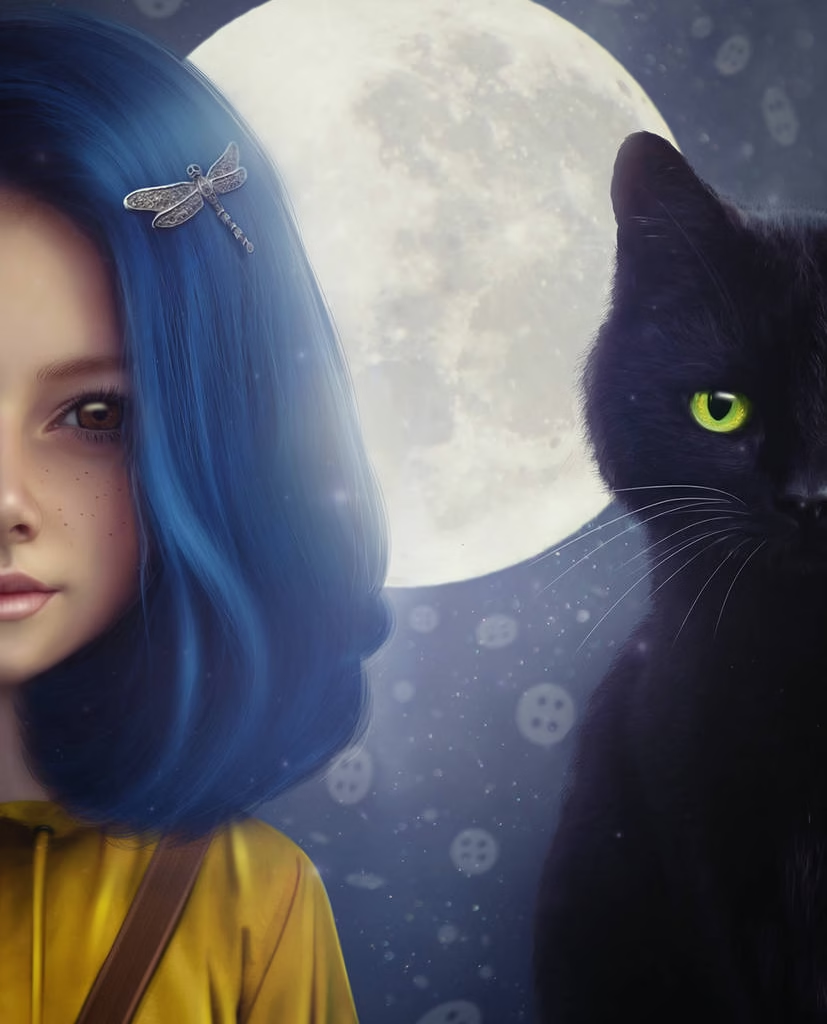
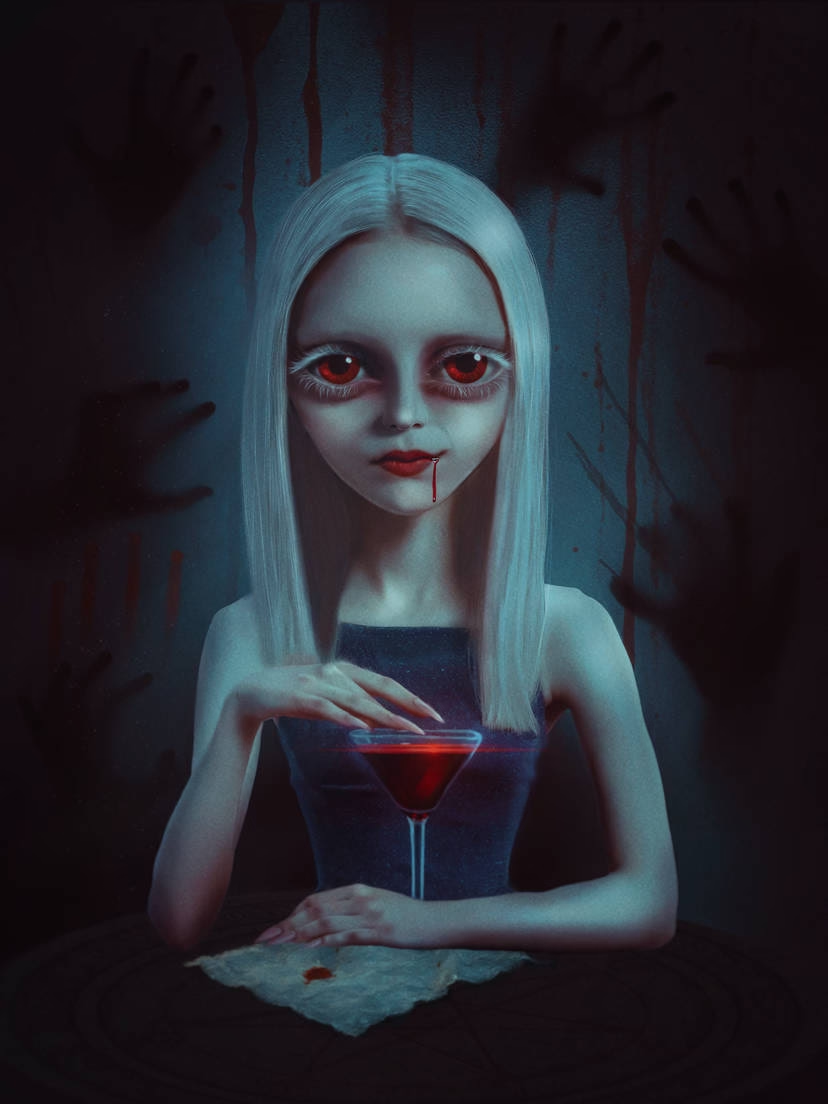
It actually wasn’t always like that. I started with much brighter and more playful work, things like doll-like portraits and stylized faces.
Over time I realized I cared more about mood and emotion than just making something look pretty. I slowly moved toward darker themes, more atmosphere and contrast.
At some point it just started to feel more natural, and now this dark, slightly gothic mood comes on its own.
2. What first drew you to photomanipulation instead of illustration or painting?
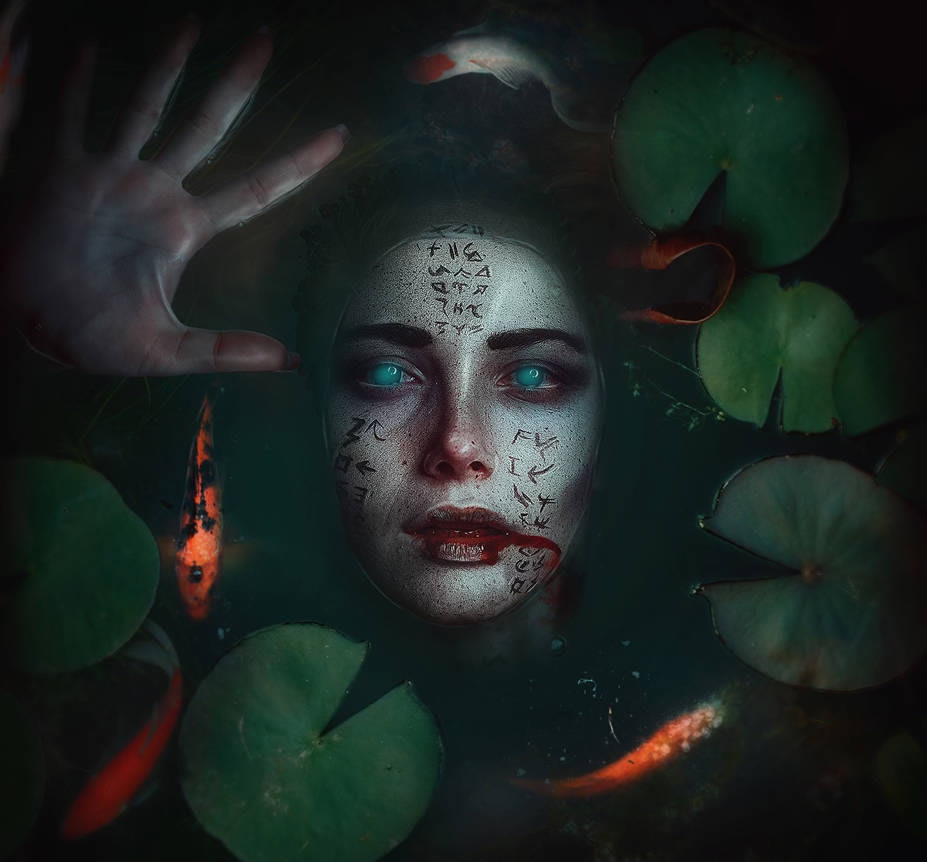
I first got into photomanipulation in the early 2010s after discovering artists like Helga Helleborus and Olga Cornacchia. Their work felt almost unreal to me at the time, like something between photography and painting, and I was completely fascinated by it.
I wanted to try the same approach, but I never saw it as something separate from drawing. I always mix both. Sometimes it’s much easier to paint hair, adjust lighting, or add details by hand than to spend hours searching for the perfect stock.
In photomanipulation, finding the right images can take a huge amount of time, so combining it with digital painting just makes the whole process more flexible.
3. Was there a specific artwork that defined your current artistic direction?
Not a single artwork, no. Like I mentioned, discovering artists like Helga Helleborus and Olga Cornacchia had the biggest influence on me. That’s what really shaped the direction I’m working in now.
🧠 Creative Process
4. Can you walk us through your typical workflow—from idea to final artwork?
Usually it starts with an idea, and then I go looking for stock images. If I can, I also shoot my own photos. My nieces were often the main characters in my works.
Once I find the right base image, everything else is just a matter of time. I gather the rest of the elements and make a rough composition to see how it all fits together.
I don’t really like doing sketches, even though I know they help a lot. When I skip them, I sometimes drift pretty far from the original idea.
The actual editing is usually much faster than searching for the right images. That’s also why I started painting parts of the image myself.
5. Do you start with a concept/story first, or do you build the story around the visuals?
It usually starts with an idea or a mood, so there is some kind of concept from the beginning.
But the final story often develops during the process, especially once I start combining images and seeing how everything works together.
6. How do you choose the right stock images and combine them seamlessly?
Over the years I’ve built my own small library of stock images, so I usually start there, especially for smaller details like plants or objects.
If I can’t find what I need, I go to stock platforms. I really like DeviantArt for that, you can find very unique images there. Sometimes I also buy stock to support the creators or if I really like a piece.
To blend everything together, I paint a lot by hand. Lighting, shadows, and small details like particles or grass, that’s what makes the final image feel seamless.
7. What’s the most challenging part of photomanipulation for you?
The very beginning, always.
When you’re just sitting there with a bunch of unrelated images and an idea, and nothing really works together yet. That’s the hardest part.
🧰 Tools, Techniques & Photoshop
8. Which tools in Photoshop do you rely on the most for your compositions?
Definitely the brush tool.
And probably the mixer brush as well. I use both a lot when blending and painting details.
9. How do you achieve that cinematic lighting and mood in your pieces?
I think it’s a mix of intuition and a lot of small adjustments. I usually just keep working on the image until it feels right.
Technically, I rely a lot on curves, color grading, and LUTs. I also use soft light and screen layers to build highlights, glow, and atmosphere.
And I repaint quite a lot to make the lighting consistent. In the end it’s more about matching everything together than using one specific trick.
10. Do you use any specific color grading techniques or presets consistently?
Besides curves and LUTs in the final stage, I usually rely on one main method for recoloring, gradient maps. I use them in almost every piece.
I really like the control they give over tones, and they help keep everything more realistic.
Other than that, I combine different techniques depending on the image.
At the end I often add a bit of noise, a slight Gaussian blur, and then refine highlights and shadows using blend if.
11. How much of your work is compositing vs digital painting?
It really depends on the piece.
I can paint from scratch, and I do it sometimes, but I just enjoy combining photos and painting more.
🎭 Storytelling & Concepts
12. Many of your artworks feel like scenes from a larger story—do you create backstories for your characters?
Yes, almost always, at least in my head while I’m working on them.
Sometimes I write a bit about it in the description, but often I prefer to leave it open and let the viewer imagine their own story.
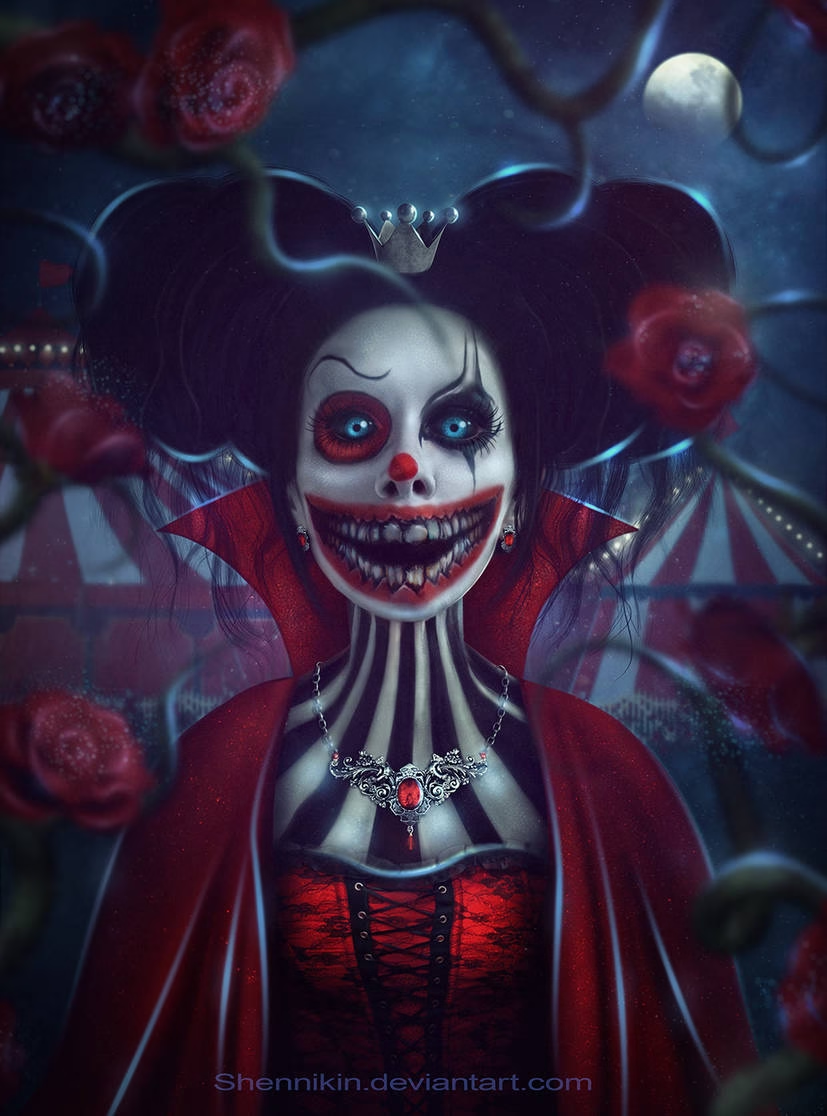
13. What inspires your concepts—movies, books, dreams, or something else?
Movies, books and quite often video games as well.
But inspiration can come from anywhere, sometimes it just appears on the way to work, even from something as simple as looking out the window.
14. Your work often features dark and emotional themes—what attracts you to these moods?
I think a lot of it comes from personal emotions.
It’s just easier for me to express certain feelings through darker themes, it feels more honest. And honestly, it’s a better way to release them than taking it out on people around me.
🏆 Challenges & Growth
15. Have you ever faced criticism or self-doubt about your work? How did you handle it?
Yes, all the time. I think self-doubt is something every creative person deals with.
I’ve also faced criticism more than once. You can’t be liked by everyone, and of course it can be unpleasant, but it’s not the end of the world.
I remember one situation early on when one of my works was reposted without permission, and I came across a lot of very negative comments about it. That hit me pretty hard at the time.
Luckily, I had support from other artists in the photomanipulation community, and that really helped me get through it.
16. What was the hardest skill to master in your journey?
Painting hair, definitely.
It’s one of those things that looks simple until you actually try to do it properly. I’m still not sure I’ve fully mastered it, but I keep working on it.
17. Looking back, what would you tell your beginner self?
I’d probably say don’t be afraid to participate in contests. They’re actually really fun, and they push you to grow much faster than working on your own.
🚀 Career & Exposure
18. How has platforms like DeviantArt helped your growth as an artist?
A lot. DeviantArt has an amazing community.
People there supported me, helped me and even taught me a lot. I remember how others would paint over my work to fix lighting or mistakes, and do it in such a kind and helpful way that you could clearly see how much better it became.
I’m still friends with some of those people after many years.
19. Do you take commissions or freelance work?
No, I don’t.
After working as a designer for a short time, I realized I don’t want someone else deciding what my work should look like.
I prefer to keep it personal. Sometimes I create things for friends or people close to me, but that’s about it.
20. What advice would you give artists trying to stand out in a crowded digital art space?
It’s not easy, but try to compare yourself to your past self, not to other artists.
That’s the only way you can really see your own progress and keep growing.
21. How do you balance realism and fantasy in your compositions?
I don’t really think about it in a strict way.
I just try to keep the lighting and details believable, and then allow myself to add more fantasy elements on top.
If it feels right, I keep it.
22. What separates a “good” photomanipulation from a “professional” one?
I think it’s when you look at the image and can’t immediately tell it’s a photomanipulation.
23. How long does a complex artwork typically take you?
It really depends on inspiration and circumstances.
When I worked on contest pieces, I usually finished them quite fast to meet the deadline.
Personal works can take much longer, sometimes I keep refining them for weeks.
24. Do you ever abandon artworks midway? Why?
Very rarely. Once I start something, I usually finish it, even if I’m not fully happy with the result or never show it to anyone.
I think I only have two unfinished works over all these years, and that’s mostly because I couldn’t find the right image to make them work.
25. Which of your artworks are you most proud of and why?
I wouldn’t say there’s one specific piece I’m most proud of. It’s always the latest one that feels like my best work at the moment.
And then I make the next one, and it happens again. As they say in Mass Effect, “The cycle cannot be broken.”
26. If you could collaborate with any artist, who would it be?
That’s a hard one. There are several amazing artists I’d love to collaborate with, but I’m honestly a bit too shy to suggest it.
Also, my Photoshop files are a complete mess. No layer names, random folders… anyone opening them is at serious risk of a heart attack.
27. What’s next for you creatively?
I’m not someone who plans too far ahead. Right now, I just want to keep improving, experimenting and pushing my work a bit further each time.
I prefer to let things evolve naturally rather than set something too specific.
🚀 Want to Create Art Like Shennikin?
If you’re inspired by this style, these are the tools that will help you get started:
• Photoshop for compositing and effects
• High-quality stock images for realism
• Basic color grading techniques
👉 Start creating your own dark fantasy artwork


